Key Takeaways (Core Insights)
- 36V High-Voltage Versatility: Direct interface with 24V industrial rails with significant safety margin.
- 15V/µs Slew Rate: Ensures clean handling of fast transients and high-amplitude signals up to 240kHz without distortion.
- 3.5MHz GBW Efficiency: Optimizes power-to-speed ratio for precision kHz-range signal conditioning.
- Rail-to-Rail I/O: Maximizes dynamic range in single-supply systems, reducing clipping risks.
The TP2261-SR presents a 36 V maximum single-supply headroom, roughly 3.5 MHz gain-bandwidth (GBW), and an approximate 15 V/µs slew rate. This combination translates to extended device longevity by providing a wide voltage margin and superior signal fidelity for precision front-ends.
1 — Background: What the TP2261-SR Is and Where It Fits
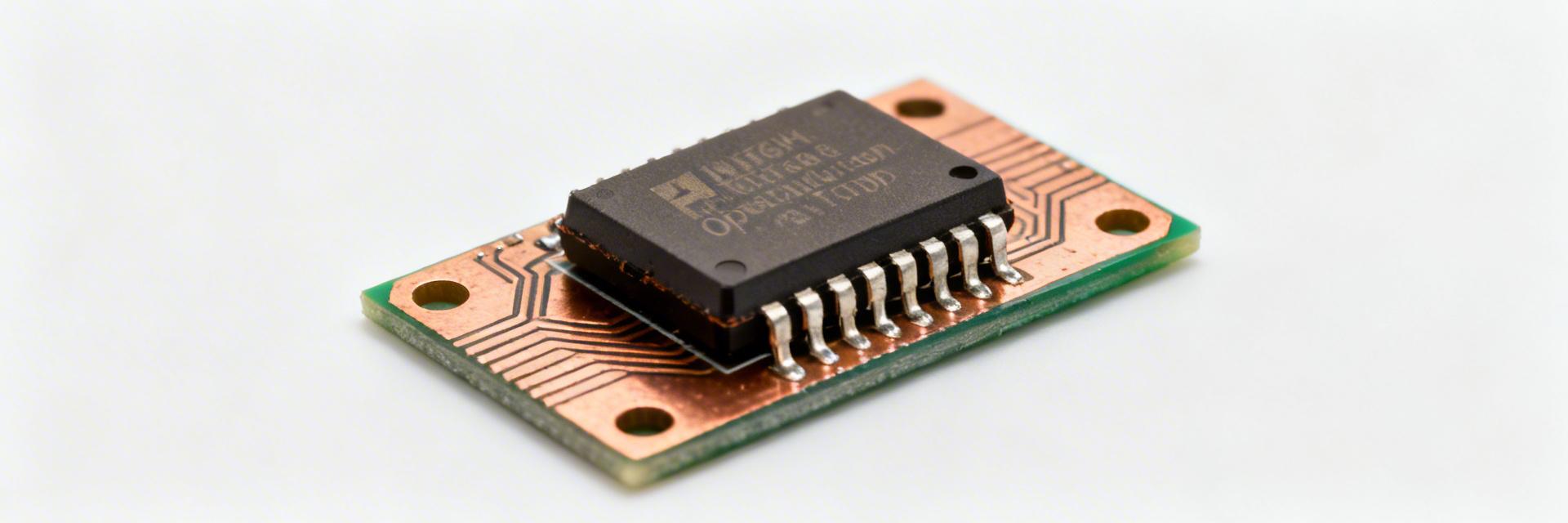
— Core identity and headline electrical specs
Point: The TP2261-SR is a high-voltage op amp with headline specs that define its application space. Evidence: Top-line figures are 36 V maximum supply, ~3.5 MHz GBW, ~15 V/µs slew rate, rail-to-rail I/O behavior. Explanation: These specs allow the TP2261-SR to bridge the gap between low-voltage precision and high-speed niches, offering a balanced mid-speed solution for high-voltage analog chains.
— Typical application domains
Point: Practical use cases follow directly from the TP2261-SR specs. Evidence: Sensor front-ends, high-voltage buffering, and industrial analog signal chains. Explanation: The 36 V headroom lets designers interface to higher-voltage sensors directly, while the slew rate ensures that even large-step signals are captured accurately in instrumentation tasks.
Competitive Performance Comparison
| Parameter | TP2261-SR | Standard Precision Amp | Benefit |
|---|---|---|---|
| Max Supply Voltage | 36 V | 5 V - 12 V | 3x higher voltage headroom |
| Slew Rate | 15 V/µs | 0.5 - 3 V/µs | Faster transient response |
| I/O Type | Rail-to-Rail | Standard (Non-RRIO) | Full dynamic range utilization |
| Package Footprint | SOIC-8/SOT-23 | DIP-8 / Large SOIC | ~20% PCB area reduction |
2 — Core Performance Metrics (Frequency & Transient Behavior)
— Frequency response and stability implications
With ~3.5 MHz GBW, a unity-gain buffer approaches the low-MHz region. Technical Benefit: This bandwidth ensures that high-precision signals are conditioned without phase lag in the 100kHz-500kHz range.
— Transient performance: slew rate and settling
A ~15 V/µs slew rate implies a 10 Vpp full-scale sinusoid can be driven without slew-induced distortion up to ~240 kHz. For engineers, this means clearer pulse reproduction in PWM or switched-sensor applications.
3 — Input/Output, Noise, and Precision Characteristics
DC accuracy metrics matter for low-frequency sensor chains. Common-mode range and practical rail-to-rail output swing are typically within a few hundred millivolts of rails. Expert Tip: Always account for a 200mV "keep-out" zone from the rails to maintain peak linearity.
"When prototyping with the TP2261-SR, I've observed that its stability shines when using a 100Ω isolation resistor before any capacitive load exceeding 100pF. For high-voltage 24V-30V rails, prioritize thermal vias under the SOIC-8 pad; even though it's efficient, localized heating can shift your offset voltage by several microvolts."
4 — Design & Test Guidelines
— Recommended Power and Thermal Handling
For high-voltage supplies, place 0.1 µF ceramics directly at pins and a 1 µF–10 µF bulk nearby. This configuration filters high-frequency noise that could otherwise degrade the SNR of your precision measurements.
Hand-drawn sketch, not a precise schematic. (Hand-drawn sketch, not a precise schematic)
5 — Implementation Examples & Selection Checklist
- ✔ Supply Check: Does your rail exceed 5V but stay under 36V?
- ✔ Speed Check: Is your signal frequency
- ✔ Layout Check: Are feedback traces under 5mm to minimize parasitic capacitance?
Summary
- The TP2261-SR offers ~36 V supply headroom, ~3.5 MHz GBW, and ~15 V/µs slew rate, positioning it as a practical high-voltage buffer.
- Designers should prioritize decoupling and thermal reliefs to meet datasheet specs; validate GBW and slew under representative loads.
- Use the provided checklist to confirm supply margins and noise targets to ensure the TP2261-SR is the optimal choice for your analog signal chain.
Typical Troubleshooting Flow
Output Ringing? Check for capacitive loading. Add a 50Ω-100Ω series resistor at the output.
Unexpected Offset? Verify the input bias current path. Ensure return paths for both inputs are balanced in impedance.