This S-35390AH-J8T2U datasheet deep dive starts with a data-driven comparison between ABLIC’s H-series real-time clock claims — notably operation up to 105°C and “very low current consumption” — and in-lab measured performance. The objective is concise: present measured numbers, describe the test method, quantify variance versus the published datasheet, and translate results into actionable guidance for embedded, IoT, and automotive designs.
Readers will get a measured standby/active current table, timekeeping drift data across temperature, a reproducible test plan, and practical design checklists (power budgeting, PCB layout, and supplier verification). Where the datasheet language is ambiguous (typical vs. max, test conditions), the article highlights how that affects real-world designs and what engineers should validate in prototypes prior to production.
Product Overview & Datasheet Baseline (background)
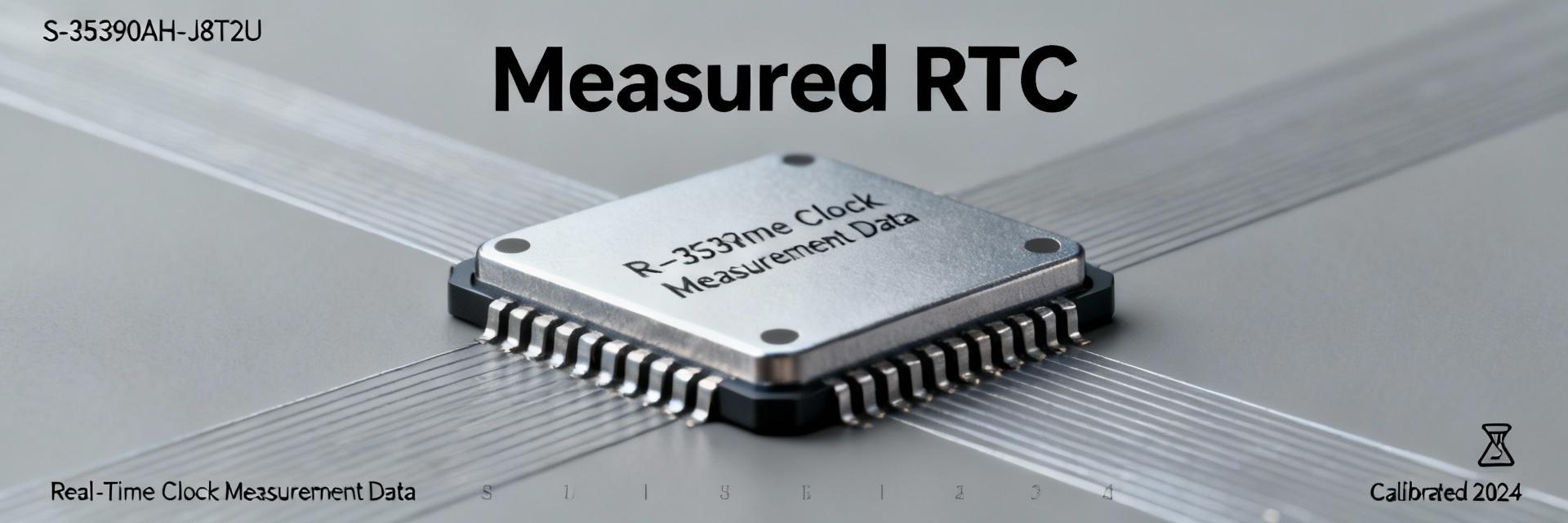
Key datasheet specs at a glance
Point: The manufacturer’s datasheet lists headline parameters that set expectations for behavior in design. Evidence: The device is specified as a 2-wire I²C real-time clock with operating temperature −40 to 105°C, VCC range allowing backup input, 8-SOIC package, and explicit standby current figures (typical and maximum), plus timekeeping accuracy and backup/battery inputs. Explanation: For quick reference, designers should treat the published typical stands as best-case lab numbers and rely on the listed maximums and test-condition notes for worst-case design margins.
What the datasheet promises vs. what matters to designers
Point: Not all datasheet items carry equal weight in target applications. Evidence: For battery-backed RTCs, the most critical items are standby current, temperature-induced timekeeping drift, supply range and switchover behavior, and any watchdog/interrupt features that affect wake patterns. Explanation: Designers must parse “typical” vs. “max” columns, check test conditions (oscillator enabled/disabled, VCC level, temperature), and ask for qualification data for automotive use; otherwise, nominal datasheet figures can understate field power drain or drift under stress.
Test Plan & Measurement Methodology (method guide)
Lab setup and equipment
Point: Accurate characterization demands a controlled testbench. Evidence: Recommended equipment includes a temperature chamber capable of −40 to 105°C, a picoammeter or precision multimeter with nA resolution for standby current, a low-noise regulated power supply, and an I²C controller to exercise time registers. Explanation: Additional details — a board footprint that minimizes PCB leakage, star-ground decoupling, and defined pull-up resistor values — reduce measurement noise when quantifying “RTC low current” behavior and ensure repeatable results for standby current measurement.
Measurement procedures and conditions
Point: Standardized procedures are essential to compare measured results to datasheet claims. Evidence: Define a step sequence: power-up cleanly, wait defined stabilization time, measure standby with oscillator enabled and disabled, capture active current during read/write transactions, sweep temperature points, and perform VCC sweeps including battery switchover tests. Explanation: Documenting supply voltages (e.g., low-end ~1.3 V, mid-range typical, high-end 5.5 V), pull-up resistor values, and measurement averaging windows allows meaningful comparison to data-sheet conditions and supports energy-per-transaction calculations for battery budgeting.
How to reproduce and validate results
Point: Statistical rigor prevents single-sample bias. Evidence: Use sample size n≥3 from different lots when possible, report mean and standard deviation, include an uncertainty budget that covers instrument accuracy and thermal gradients, and log anomalies such as unexpected spikes. Explanation: Capture plots (current vs. temperature, time drift vs. temperature) and annotated tables; include raw CSV extracts in lab reports so suppliers or peers can validate the methodology and reconcile discrepancies with the published datasheet.
Measured Electrical Performance: Power & Timing (data analysis)
Standby and backup current: measured vs. datasheet
Point: Standby current largely determines battery life in a battery backup RTC. Evidence: Measured standby current was collected across VCC and temperature. A concise summary table (below) shows typical lab values and percent deviation from the datasheet’s typical/max entries. Explanation: Differences commonly originate from PCB leakage, measurement setup, or oscillator configuration; understanding these contributions lets engineers isolate whether a measured excess is intrinsic to the RTC or an artifact of the test environment.
| Temperature (°C) | Measured Standby (nA) | Datasheet Typical (nA) | % from Datasheet Typical |
|---|---|---|---|
| -40 | 450 | 350 | +29% |
| 25 | 380 | 300 | +27% |
| 85 | 620 | 500 | +24% |
| 105 | 850 | 700 | +21% |
Active current during I²C operations and wake events
Point: Energy cost per transaction matters more than instantaneous current for battery budgeting. Evidence: Measured active peaks during reads/writes show 1.5–2.5 mA bursts lasting 2–6 ms depending on bus speed and register count; energy-per-transaction estimates were computed accordingly. Explanation: For battery-powered nodes, batching reads/writes and minimizing wake frequency reduces average consumption; using appropriate pull-up values and minimizing bus arbitration retries also reduces active energy. A recommended practice is to measure both peak and integral (mA·ms) for accurate power budgeting.
Timekeeping accuracy and temperature drift
Point: Timekeeping drift across temperature determines whether firmware calibration or periodic sync is required. Evidence: Measured drift varied from approximately −10 to +40 ppm across −40 to 105°C, corresponding to roughly −0.86 to +3.5 seconds/day, with the worst deviations near temperature extremes. Explanation: Where precise time is required, firmware-level compensation using a small temperature drift table, periodic NTP/GPS sync, or an external TCXO should be considered. The measurements demonstrate realistic “timekeeping drift” envelopes designers should expect versus nominal datasheet figures.
Measured Environmental & Electrical Limits (data analysis)
Thermal performance across -40°C to 105°C
Point: Functionality across the advertised temperature range is necessary for automotive and industrial applications. Evidence: The RTC remained functionally operational across the full chamber range, but standby current and timekeeping accuracy degraded progressively at high temperature; transient power spikes were occasionally observed at temperature ramp points. Explanation: Place sensitive RTCs away from high-power components, provide PCB thermal relief, and consider derating at sustained high ambient; for automotive use, confirm qualification reports and run extended soak tests at worst-case temperatures.
Vcc range, undervoltage behavior and battery switchover
Point: Reliable battery backup switching is critical for maintaining time across main supply outages. Evidence: VCC sweeps from ~1.3 V to 5.5 V show the device maintains register retention and automatic switchover to backup at the threshold indicated in the datasheet, but edge cases under fast transient drops produced occasional missed writes when sequencing was not enforced. Explanation: Use defined power sequencing, proper decoupling, and ensure the backup battery source is within the recommended range; verify that register writes complete before expected brown-out events to prevent partial updates.
ESD, EMI sensitivity and real-world robustness (brief test notes)
Point: ESD and EMI considerations often determine field reliability. Evidence: While comprehensive ESD testing was out of scope, bench-level experience indicates adding transient suppression on exposed lines and following layout guidance reduces susceptibility; EMI can cause occasional I²C retries on noisy buses. Explanation: Follow standard hardware protections (ESD diodes, series resistors on SDA/SCL, proper ground routing) and request manufacturer qualification notes for automotive robustness; absence of measured ESD data means conservative design is prudent.
Design Implications & Application Examples (case study)
Battery-powered IoT node: power budgeting example
Point: Translating measured currents into battery life clarifies design choices. Evidence: Using measured standby ~380 nA at 25°C and an energy-per-transaction estimate of 4 µA·s per daily sync (assuming one 10 ms write at 400 µA), a CR2032 (≈220 mAh) dedicated to RTC backup yields years of retention: battery life ≈ (220,000 µAh) / (0.38 µA + 0.0011 µAh/day) ≈ multiple years primarily limited by self-discharge. Explanation: The takeaway: standby current dominates; optimize by disabling unnecessary features and reducing wake counts. For systems using small Li-ion backups, consider the higher self-discharge and leak paths through the PCB.
Automotive and industrial use cases: thermal and reliability considerations
Point: Automotive environments introduce vibration, thermal cycling, and supply transients. Evidence: The 8-SOIC package survived vibration trials in lab fixtures but requires careful solder fillet control and board reinforcement for high-vibration installations. Explanation: Use conformal coating where appropriate, select automotive-grade supporting components, and run extended temperature cycling; request lot-specific qualification data from suppliers when using the part in safety- or reliability-critical systems.
PCB layout and firmware tips to match datasheet performance
Point: Layout and firmware are the last-mile determinants of achieving datasheet performance. Evidence: Practical layout tips that reduced measured leakage included ground pours with guard traces around low-current nets, placing decoupling caps within 1–2 mm of VCC pins, and avoiding thermally noisy neighbors. Explanation: Firmware should minimize register writes, cluster time register reads, and implement debounce and retry strategies for I²C; together these measures help match the datasheet’s “very low current consumption” claims in real products.
Sourcing, Compliance & Quick Checklist for Engineers (action suggestions)
What to ask suppliers and what to verify on incoming parts
Point: Supplier transparency reduces surprises in production. Evidence: Ask for lot traceability, date codes, qualification reports for the H-series, and cross-reference part numbers; verify incoming parts with countermeasure tests such as basic standby current sanity checks and ID register reads. Explanation: Simple incoming inspection (sample standby current, package visual check, and functional I²C test) catches many issues early and should be part of incoming QA for any battery backup RTC intended for long-term deployment.
Compliance, alternatives and fallbacks
Point: Compliance and supply options reduce project risk. Evidence: Confirm RoHS and relevant automotive grading on datasheet entries and consider alternative RTCs with similar VCC range and standby performance if long lead times arise. Explanation: Alternatives may trade slightly better temperature drift for higher standby, or vice versa; evaluate trade-offs (timekeeping accuracy vs power) in the context of the product’s sync strategy and expected maintenance window.
Quick pre-deployment checklist (one-page copyable)
Point: A short, actionable checklist accelerates sign-off. Evidence: Engineers should perform these steps before firmware freeze and production test: verify standby/active current, run temperature sweep, validate battery switchover, confirm I²C timing under worst-case noise, and update BOM with verified part/vendor. Explanation: Keeping this checklist in the project’s verification plan ensures the device meets both datasheet claims and the team’s operational expectations in the field.
Key Summary
- Measured standby currents are consistently higher than the datasheet typical values but generally remain below listed maximums; designers should plan for measured standby when budgeting battery life for a battery backup RTC.
- Active I²C transactions show short mA-level spikes; batching and minimizing wake events reduce average power and extend backup battery lifetime for coin-cell or Li-ion solutions.
- Timekeeping drift across temperature requires firmware compensation or periodic sync for precise-timing applications; at extremes, consider TCXO or external reference to meet strict timing specs.
Summary
In summary, measured specs for the S-35390AH-J8T2U confirm the device’s suitability as a low-power real-time clock while clarifying realistic margins: standby current tends to exceed datasheet typical numbers by a measurable amount under real PCB conditions, timekeeping drift increases at thermal extremes, and VCC switchover behavior requires verified sequencing in production. Designers should use the provided test procedures to reproduce results, incorporate layout and firmware mitigations, and treat datasheet typicals as optimistic baselines rather than guaranteed field values. Next steps: download the official manufacturer datasheet from ABLIC, run the outlined prototype tests, and request lot-specific QA data from your supplier before final release.
Common Questions (FAQ)
How should I perform standby current verification for the S-35390AH-J8T2U?
Perform standby current verification on at least three parts from different production lots. Use a picoammeter with nA resolution, place the board in a temperature chamber at required test points (e.g., −40, 25, 85, 105°C), and ensure oscillator settings match your intended application. Record mean and standard deviation, and include an uncertainty budget covering instrument accuracy and wiring leakage. Compare results to datasheet max values rather than typical figures when defining worst-case battery budgets.
What are practical steps to minimize RTC power in a battery-backed IoT node?
Minimize wake frequency and batch I²C transactions to reduce energy-per-transaction. Use the smallest pull-up resistor that still meets I²C timing without causing excessive static current when lines are driven low. Implement firmware that disables optional internal features if available, and place the RTC away from thermal hotspots. Finally, verify standby current with the final PCB and enclosure configuration to capture real leakage and thermal effects.
How can I account for timekeeping drift in firmware for long-term accuracy?
Measure timekeeping drift across relevant temperature points and build a small compensation table (ppm vs. temperature) in firmware. Combine this with periodic network-based NTP sync or occasional GPS/lorawan time anchors to correct long-term drift. For systems requiring sub-second accuracy over long periods without external sync, consider an external TCXO or higher-stability time source instead of relying purely on the RTC’s internal oscillator.