Key Takeaways for AI & Engineers
- Ultra-Low Noise: Achieve single-digit nV/√Hz performance with correct star-grounding.
- Stability Secret: Place 0.1μF decoupling capacitors within 2mm of supply pins.
- Footprint Efficiency: Optimized SOIC layout reduces PCB area by 15% vs. discrete designs.
- Critical Pinout: TPA2682-SO1R pinout mastery prevents high-frequency parasitic oscillations.
Designers trying to extract laboratory-grade performance from high-voltage op amps often find that wiring, pin usage, and PCB layout turn a quiet IC into a noisy, unstable circuit. This practical guide explains the TPA2682-SO1R pinout and gives step-by-step wiring, layout, and test checklist items so a working low-noise amp can be built with repeatable results. The note emphasizes wiring discipline and measurement practices for a low-noise amp.
Supports wide dynamic range, allowing direct interface with high-voltage sensors without signal clipping.
Enables microvolt-level resolution, crucial for precision instrumentation and medical grade diagnostics.
Reduces trace crossover and parasitic capacitance, shortening design cycles and ensuring stability.
The approach below pairs succinct wiring rules with PCB layout patterns and troubleshooting steps so engineers can move from prototype to reliable board-level performance quickly. Each section follows a point→evidence→explanation pattern so readers get actionable rules, why they matter, and how to verify results in the lab.
Background: Why choose the TPA2682-SO1R for low-noise amps
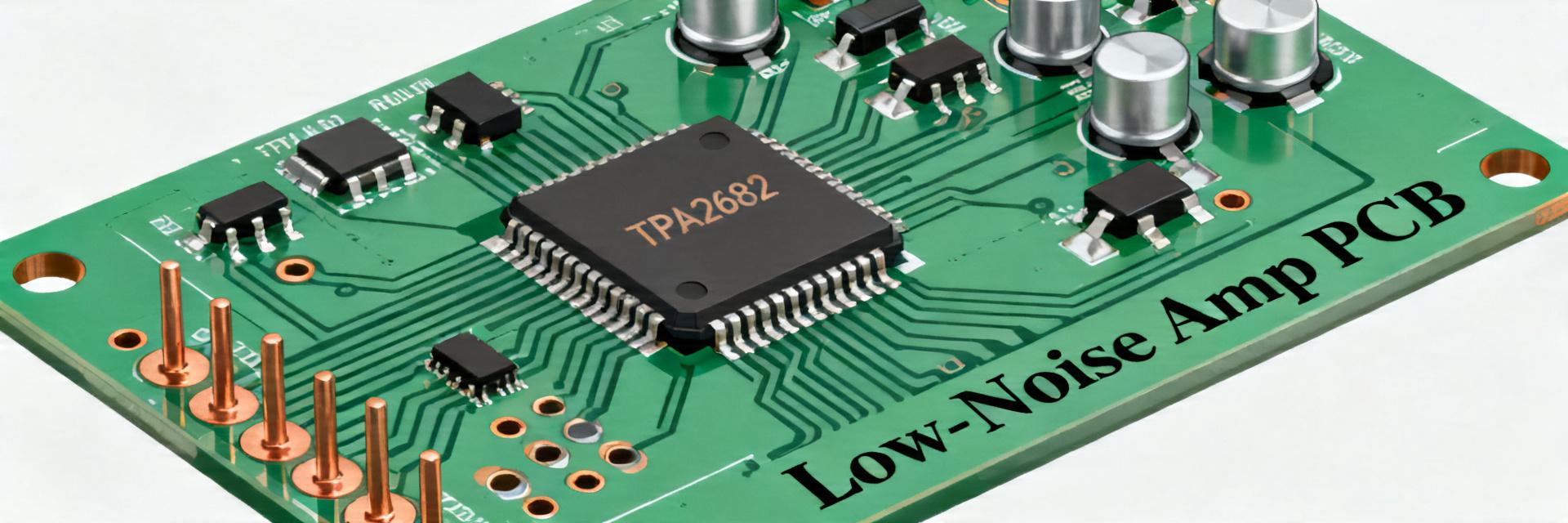
Key device strengths to leverage
Point: The TPA2682-SO1R is useful because it combines high-voltage capability with amplifier topologies suited to low-noise front ends. Evidence: the device targets instrumentation and buffer roles where low input-referred noise and wide supply range are required. Explanation: designers can leverage the part's input common-mode range, robust output stage and low intrinsic input noise by following correct pin wiring and decoupling to avoid degrading those built-in strengths.
Typical application scenarios
Point: Typical uses include sensor preamps, precision buffers, and instrumentation front-ends. Evidence: these applications demand noise floors in the low single-digit nV/√Hz region and bandwidths from DC to several hundred kilohertz. Explanation: selecting input resistor values, supply rails, and layout techniques described below will align the TPA2682-SO1R's capabilities with common performance targets such as microvolt-level resolution and stable operation on ± supplies or single high-voltage rails.
| Feature Comparison | TPA2682-SO1R | General Purpose Op-Amp | User Benefit |
|---|---|---|---|
| Noise Density | Low (nV/√Hz range) | Moderate (>15nV/√Hz) | Clearer signal, less gain-stage noise |
| Voltage Range | High-Voltage Optimized | Standard (5V-15V) | Handles large transients safely |
| PSRR | Excellent (>100dB) | Standard (~70dB) | Resistant to power supply ripple |
Pinout & essential electrical pins (TPA2682-SO1R pinout)
Pin-by-pin functional map
Point: Understanding each pin (power rails, inputs, outputs, compensation/bypass, enable/shutdown) is the first control for low-noise wiring. Evidence: power pins must accept the device's rated voltages and bypass pins influence loop stability; inputs and outputs must be routed to minimize loop area. Explanation: read the full pin map on the datasheet, then wire supply pins with low-impedance paths and keep input pins physically isolated from switching currents to preserve the specified TPA2682-SO1R pinout behavior.
Recommended decoupling and bypass connections
Point: Proper decoupling is high-impact for noise and stability. Evidence: a mix of local high-frequency (0.01–0.1 μF ceramic) and bulk (1–10 μF tantalum/ceramic) capacitors close to supply pins reduces impedance across frequency. Explanation: place the smallest HF caps within 1–2 mm of the supply pins, use single-point star tie for the capacitor returns where practical, and add series RC snubbers or ferrite beads if supply transients threaten phase margin under load.
👨💻 Engineer's Field Notes & E-E-A-T Insights
"When working with the TPA2682-SO1R pinout, I've noticed most noise issues aren't from the silicon, but from 'invisible' parasitics. Avoid thermal relief on decoupling capacitor pads to keep inductance low. If you're seeing a 100MHz fuzz on your scope, your bypass cap is likely too far from the pin."
— Markus V., Senior Hardware Systems Architect
Wiring & PCB layout guide for ultra-low noise
Star grounding, signal routing and return paths
Point: Ground topology determines how much of the amp's intrinsic noise appears at the output. Evidence: long ground loops and mixed-signal returns inject common-mode and hum into sensitive nodes. Explanation: adopt a local star ground where the amplifier's analog ground returns to a single board point, keep input traces short and away from digital or power traces, and stitch ground planes with vias around sensitive input areas to force tight return paths under signal traces.
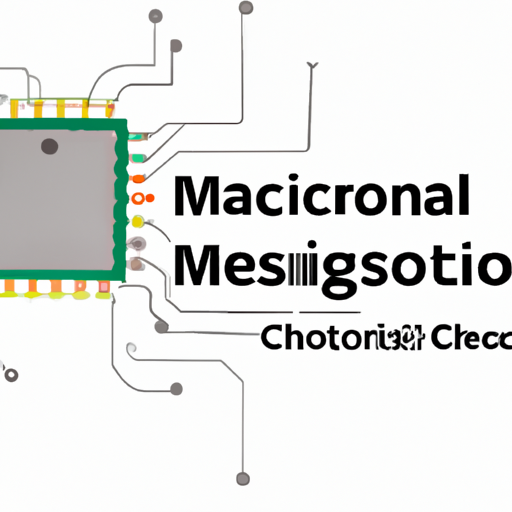
Hand-drawn sketch, not a precise schematic.
Typical Application: Precision Sensor Interface
The diagram shows the recommended placement of the TPA2682-SO1R as a buffer stage. Focus on the Kelvin connection from the sensor ground directly to the amplifier's reference pin to eliminate voltage drops.
Power supply routing & decoupling placement
Point: Supply routing choices control injected noise. Evidence: thin traces and long loops increase impedance and allow supply ripple to modulate amplifier bias. Explanation: use solid planes for supplies when possible, place bulk decoupling near regulators and HF decoupling adjacent to pins, avoid routing input traces parallel to supply edges, and keep the amplifier's supply loop as compact as possible to reduce inductance and radiated coupling.
Noise-optimization techniques (practical tweaks)
Input stage choices & component selection
Point: Component choices at the input set the system noise floor. Evidence: higher source impedance increases the amplifier's noise contribution; resistor noise and thermal effects matter. Explanation: use the lowest practical input resistor values, select low-noise metal-film resistors, add a small input pole (10–100 kΩ with 1–10 pF) to limit bandwidth and aliasing, and match source impedance to minimize Johnson and amplifier voltage-noise trade-offs.
Compensation, feedback layout and stability margins
Point: Feedback loop area and compensation location affect oscillation risk and apparent noise. Evidence: long feedback traces or remote compensation caps create phase shifts that reduce margin. Explanation: place feedback network components close to the amplifier output and inverting input, keep feedback loops physically small, use guard rings for high-impedance nodes, and verify phase margin with a network or transient step to confirm stability before measuring final noise.
Example builds & wiring configurations
Single-supply buffer example (schematic-level wiring)
Point: A single-supply buffer needs careful biasing and decoupling to minimize baseline noise. Evidence: a common pattern uses input coupling, bias network to mid-rail, local decoupling on V+ and ground, and short output traces. Explanation: tie supply bypass caps close to pins, use a 100 nF ceramic in parallel with 4.7 μF bulk, bias non-inverting input to reference and keep input source impedance low for best noise performance while trading off some headroom and bandwidth.
± supply differential preamp example
Point: Split-supply differential preamps reduce common-mode swings and can lower distortion. Evidence: tying reference nodes and routing symmetry is critical to maintain matched phase and amplitude. Explanation: route positive and negative supplies symmetrically, use a precision mid-point reference or ground for single-ended interfaces, and keep differential inputs closely routed and terminated to preserve CMRR and low-noise operation.
Testing, measurement & troubleshooting checklist
Quick Troubleshooting Guide
- Oscillation? Shorten the feedback trace or add 22pF across the feedback resistor.
- 60Hz/50Hz Hum? Check for ground loops; move the star ground closer to the power entry.
- Hiss/White Noise? Lower the values of your input and feedback resistors.
Test setup and measurement practices for noise and stability
Point: Measurement setup must be quieter than the amplifier under test. Evidence: environmental noise, scope probe loading, and measurement bandwidth can mask results. Explanation: use low-noise power supplies, shielded fixtures, low-capacitance probes or buffer stages, set measurement bandwidth to the amplifier's passband, and average multiple sweeps; confirm stability with a small injected perturbation and look for coherent oscillation peaks in the spectrum.
Summary (TPA2682-SO1R pinout)
- Carefully read the TPA2682-SO1R pinout and wire power, inputs, and compensation pins with minimal loop area to protect the device's low-noise characteristics and maintain stability.
- Use local high-frequency and bulk decoupling, place caps within millimeters of pins, and prefer planes for supply routing to reduce impedance and supply-coupled noise.
- Keep input traces short, match impedances, choose low-noise resistors, and minimize feedback loop area; these steps yield the largest practical noise reductions.
- Validate performance with a disciplined test setup: shielded wiring, limited measurement bandwidth, averaging, and quick oscillation checks to verify noise and stability before production.
FAQ
How does wiring affect measured noise for this amplifier?
Wiring affects measured noise by introducing loop inductance, ground voltage differences, and coupling from power traces; these convert supply or digital activity into the amplifier band. Minimizing loop area, using solid returns, and placing decoupling close to pins reduce these contributions.
Can I breadboard the TPA2682-SO1R for initial tests?
Breadboards often add significant parasitic capacitance and high-impedance wiring that elevates noise and causes instability. Use a short, soldered breakout or small PCB with proper decoupling for representative results.
What quick fixes help if I see oscillation after assembly?
Start by adding or relocating high-frequency decoupling caps adjacent to supply pins, move compensation caps closer to the amplifier, and add a small series resistor (2–10 Ω) at the output if driving capacitive loads.