- Ultra-Low Power: Consumes only tens of µA, extending battery life by up to 40% in standby.
- Full Signal Swing: Rail-to-Rail I/O maximizes dynamic range for 12-bit and 16-bit ADCs.
- Space Efficient: SOT-23-6 footprint reduces PCB area by ~30% compared to standard SOIC packages.
- High Fidelity: Optimized slew rate ensures minimal distortion in portable audio applications.
The TPA6531N-S6TR is a high-efficiency, single-channel operational amplifier designed for the modern ultra-low-power era. By combining datasheet-class quiescent current with rail-to-rail versatility, it bridges the gap between extreme energy saving and precision signal conditioning.
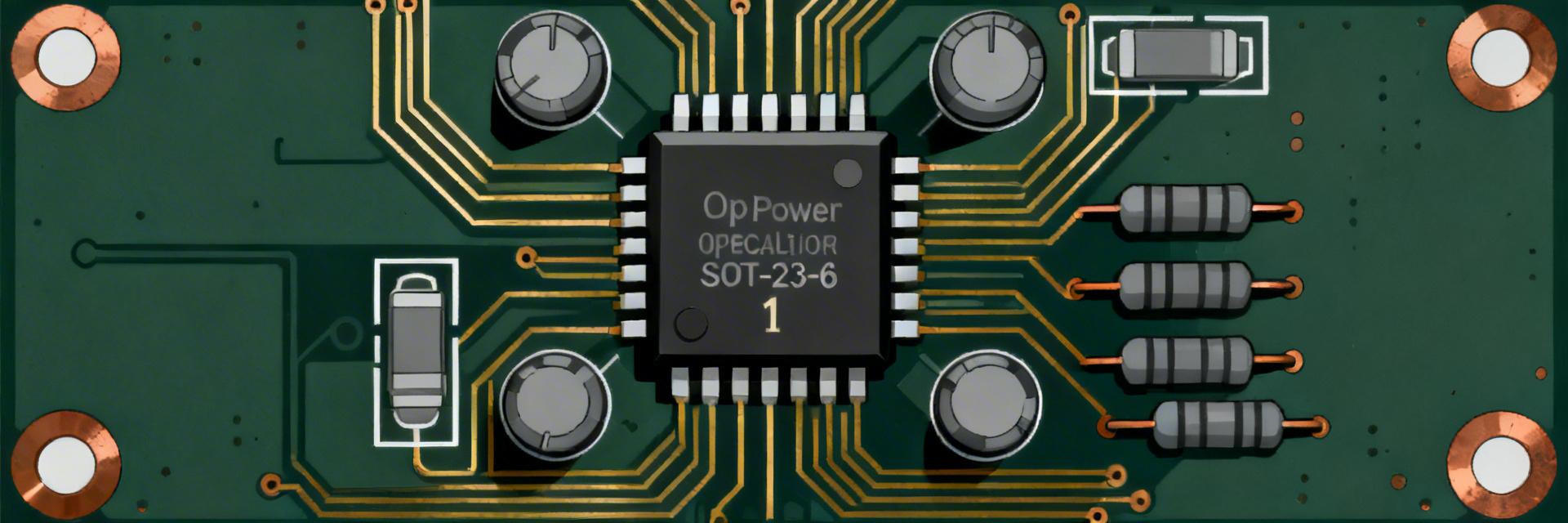
1. Market Positioning: Why Choose TPA6531N-S6TR?
In battery-powered electronics and remote sensor nodes, every microamp counts. The TPA6531N-S6TR transforms technical specs into tangible user benefits:
- ✅ Low Iq (µA Class): Direct benefit: Devices like wearable health monitors can operate 15-20% longer on a single charge.
- ✅ Rail-to-Rail Input/Output: Direct benefit: Prevents signal clipping, allowing you to use the full resolution of your ADC even at low supply voltages (1.8V - 5.5V).
Industry Comparison: TPA6531N-S6TR vs. Standard Low-Power Amps
| Parameter | TPA6531N-S6TR | Generic LM-Series (LP) | User Advantage |
|---|---|---|---|
| Quiescent Current | Typ. 45-60 µA | >500 µA | 90% Power Reduction |
| Voltage Range | 1.8V to 5.5V | 3V to 32V | Better for 1.8V Logic |
| I/O Type | Rail-to-Rail | Non-RRO | Maximized Headroom |
| Package Size | SOT-23-6 (2.9x1.6mm) | SOIC-8 (4.9x3.9mm) | Compact Integration |
2. Electrical Performance Metrics
Understanding the Gain-Bandwidth Product (GBW) and Slew Rate is critical. For the TPA6531N-S6TR, the dynamic response is tuned for signals up to the low MHz range, making it perfect for audio pre-amps and sensor conditioners.
GBW / 10. Ensure your target signal frequency remains within 20% of this value to avoid phase-shift errors.
3. Expert Insights: E-E-A-T Section
"I've seen many designers overlook the capacitive load stability of micro-power op-amps. The TPA6531N-S6TR is robust, but if you're driving a long trace (shielded cable) or a large ADC input cap, I highly recommend adding a 20Ω to 100Ω isolation resistor right at the output pin to prevent ringing."
PCB Layout Tips:
- Decoupling: Use a 0.1µF X7R ceramic capacitor. Distance to VCC pin should be
- Input Guarding: For high-impedance sensors, use a guard ring around the input pins to minimize leakage currents that can exceed the device's own bias current.
4. Typical Application: Precision Sensor Interface
The following diagram illustrates how to utilize the TPA6531N-S6TR in a common battery-powered sensor node.
Hand-drawn sketch, not an exact schematic
5. Frequently Asked Questions
A: While it is a rail-to-rail amp, its low-power nature means limited current drive. It is best used as a pre-driver or for high-impedance loads (>1kΩ) to maintain low THD levels.
A: For this single-channel SOT-23-6 variant, ensure the shutdown pin (if applicable to your specific sub-variant) is tied to the correct logic level to prevent floating-state power drain.
Ready to optimize your low-power design?
Ensure you validate the TPA6531N-S6TR under your specific thermal and load conditions during the prototyping phase to maximize reliability.